
INTERVIEW
Alice Gee | 07/07/2026
Audiences got a brief tease of Daniel at the end of Season 2. What can you tell us about who he is when we first meet him in Season 3?
What we gathered from season two is that he’s a congressman, he seems to have faith in the system, he wears his heart on his sleeve, but there seems to be something niggling at him, and then in season three, as we learn about his family and his frustrations with government, we get to explore that creeping doubt.
What drew you to the character, and how does he fit into the larger world of Silo?
I loved the set-up - that I could join a show I already loved, and then be part of creating a new world within that show. I liked him. I like how kind he is, how optimistic he is. I liked how hard he hung onto the simplest, most rational explanation for what was happening around him - that in spite of mounting evidence of fuckery he tries, for as long as he can, to fit it into his worldview. That’s something I connect with.
One of the show's strengths is the way it slowly reveals information. What was your reaction when you learned Daniel's place in the story?
I was pretty shook.
What aspects of Daniel surprised you most as you explored the role?
You know, he was sadder than I thought he’d be. He’s a fun character to play; he’s nerdy and finds himself amusing and has this righteous know-it-all streak, but he is a product of his history, and he has a sad story that keeps coming up for him.
Daniel enters the story at a pivotal moment in the Silo universe. What can you tease about the state of the world from his perspective?
I think he’s aware that he lives in a compromised world, but - yeah - he has this fundamental belief that the system can correct itself. And then he meets this journalist, Jess Henwick’s character, who is a little more of an anarchist - and that tension between them is what fuels a lot of their early connection.
Silo deals with power, control, and information. How does Daniel navigate those themes?
Well, information in and out of the silo is controlled to maintain the status quo, and Daniel operates within that status quo. But when things become personal for him, and they do very quickly, he has a hard time hanging onto his beliefs.
The first look at the new season hints at an even bigger scope. What can fans expect from Season 3, and what do you think will surprise them about Silo’s complexities?
We’ve been setting things up for two seasons, and now we get to knock them in. And knowing this is a four-season story, everything matters. I don’t think anyone wants to read any more than that.
How much did you know about Daniel's arc when you signed on, and what was your reaction when you learned where the character fits into the larger picture?
I guess not much about his arc. I knew who he was; I knew he’d be involved in the origin story, but I had no idea it would be what it ended up being. Thinking back to it, when I got on the phone with Graham (Yost), the creator of the show, I could sense something was afoot.
Having watched the first two seasons, what did stepping into season three in front of the camera bring to mind, having consumed them from in front of the screen?
In a way, it didn’t feel like we were making the same show - tonally, it was the same world, occupied by the same questions, but the day-to-day didn’t feel like Silo at all. That was our mandate - we had to make our part of the story feel different, feel like life now.
What are Daniel's biggest strengths—and his biggest blind spots?
He’s an engineer. He’s rational, persistent. He thinks all problems can be solved with enough hard work and information. That’s probably both his biggest strength and weakness. Maybe there are some questions you can’t think your way out of.
Is Daniel someone audiences will immediately trust, or is he a character who keeps viewers guessing?
I think he’d probably prefer to be thought of as a little aloof, but unfortunately for him what you see is what you get. Even in that season two scene, I don’t think he had the best poker face.
Across your work, you've often played characters operating within powerful systems. Is that something you consciously gravitate toward?
It’s not something I look for. I guess if anything, even if the character operates in a similar space, I think of them as entirely different people. And the window dressing of their lives is usually the least interesting thing about them.
What have you learned about portraying ambition on screen?
That’s a jump. I guess some of the characters I’ve played have ambition. But I think all characters are driven to something? There has to be something that’s critical to them. That they desperately need. I don’t know. I have opinions about my own ambition, and those opinions keep changing, but I don’t think that comes from the characters I’ve played. That just comes from living a life.
Looking at your career so far, is there a role that challenged you in a way you may not have expected?
All the ones that mattered have. If it’s all working, it’ll never be what I expect. The challenges might be practical, technical, geographical, and sometimes emotional, character-driven. But there’s always something.
If you could describe Season 3 of Silo in three words, what would they be?
Inside Outside Inside.
Watch Silo on Apple Tv.
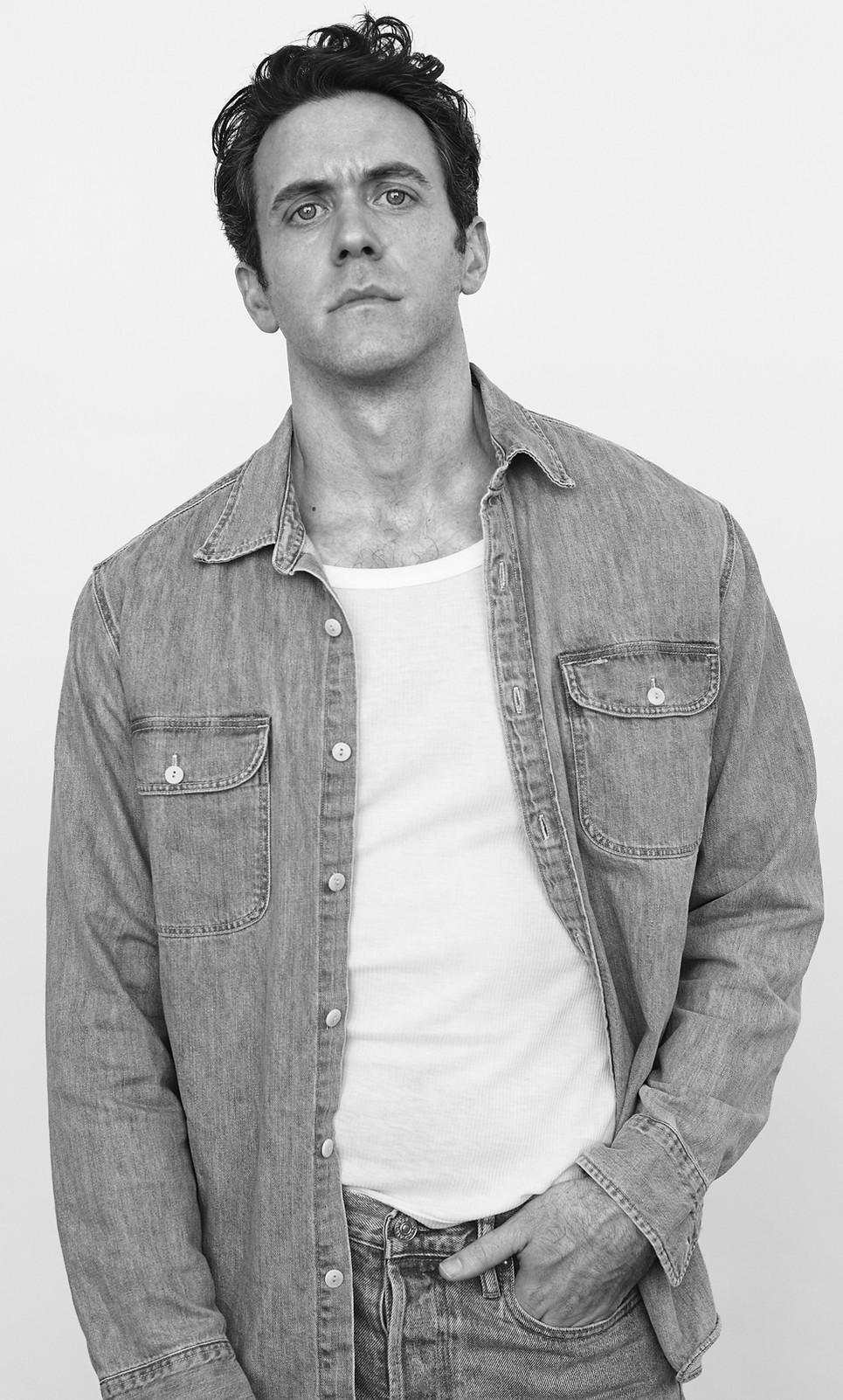
Photography Clay Gardner.
.jpg)